
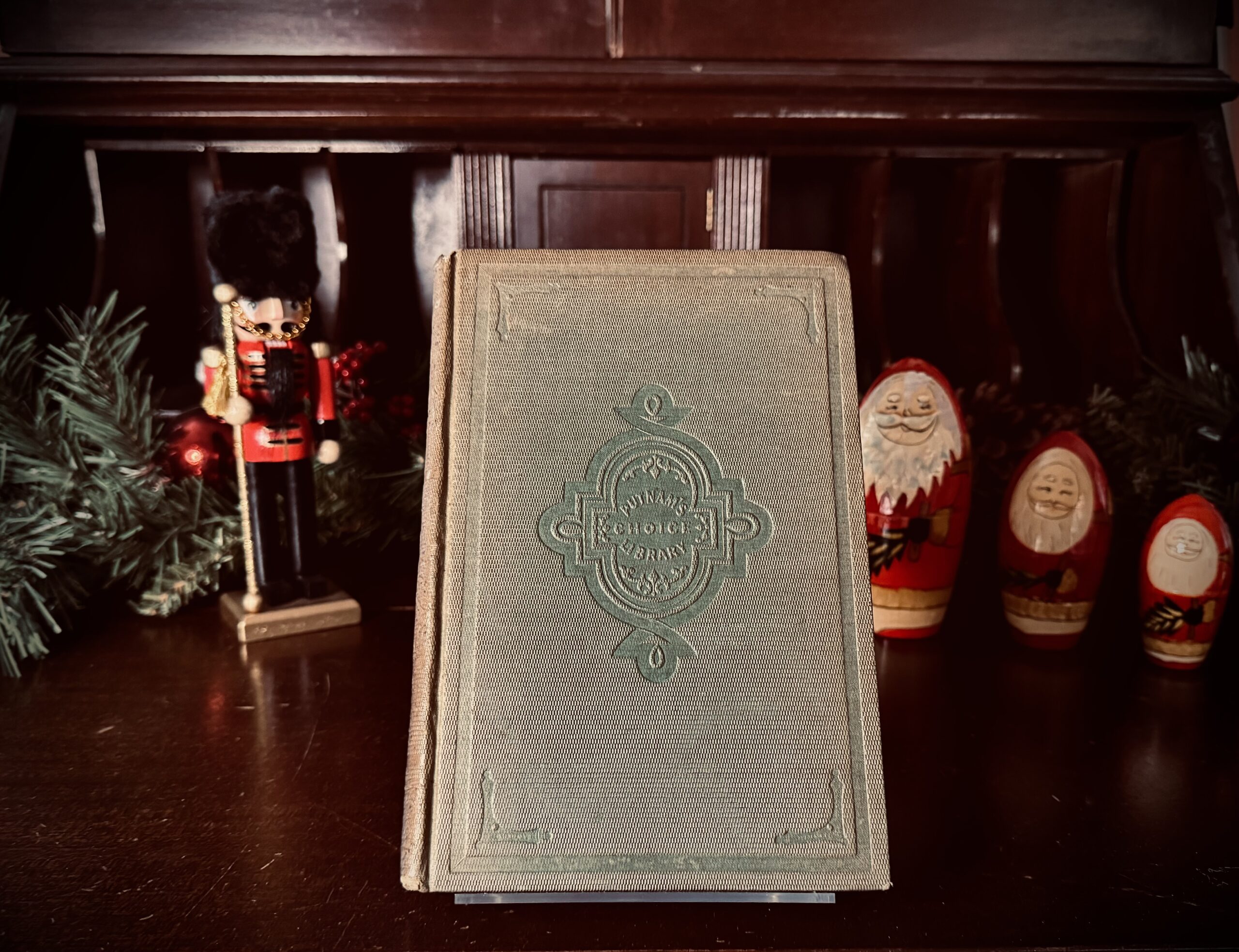
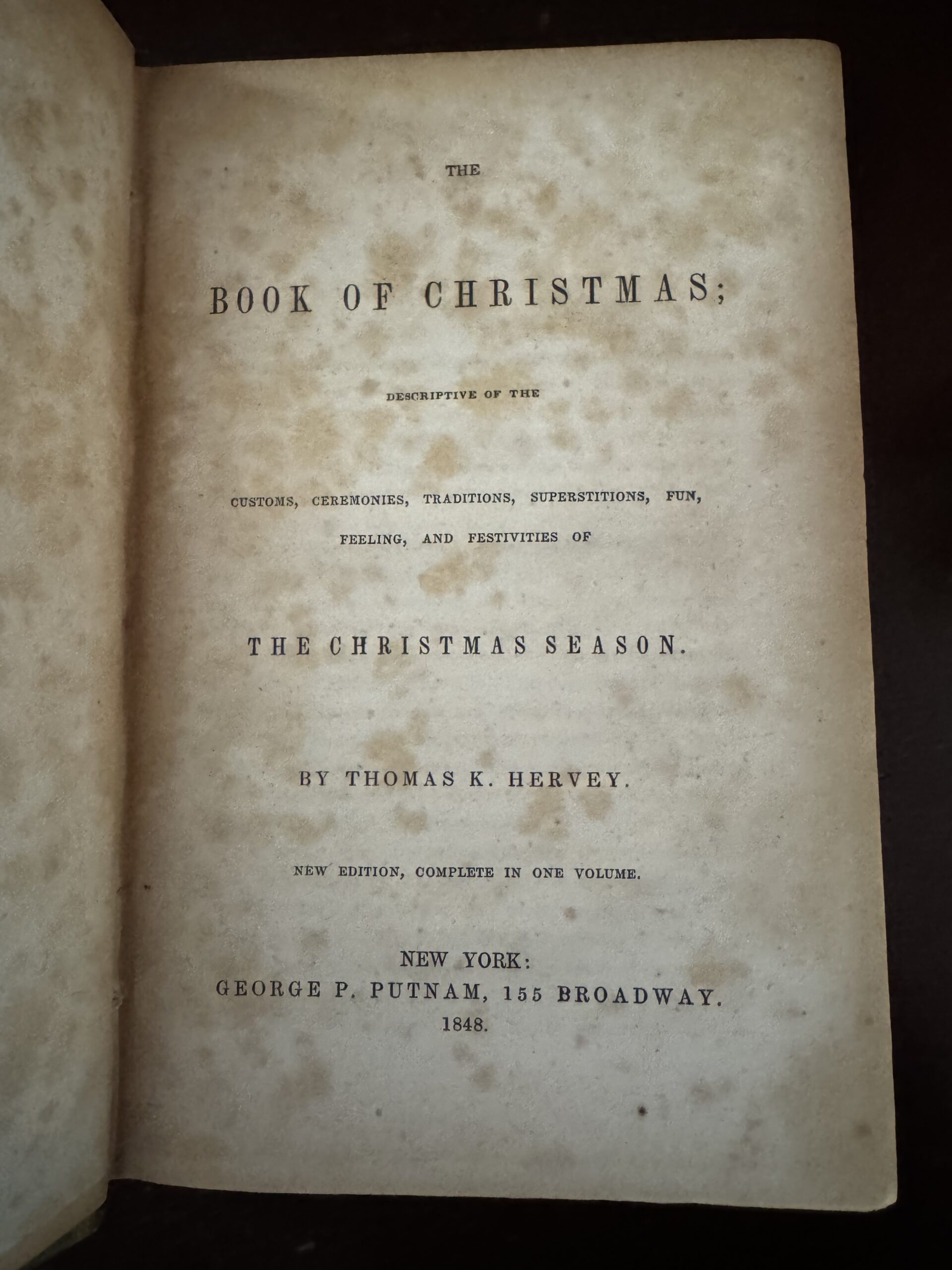
- Title: The Book of Christmas; Descriptive of the Customs, Ceremonies, Traditions, Superstitions, Fun, Feelings, and Festivities of the Christmas Season
- Author: Thomas K. Hervey
- Publisher: George P. Putnam, New York
- Year of printing: 1848
Notes:
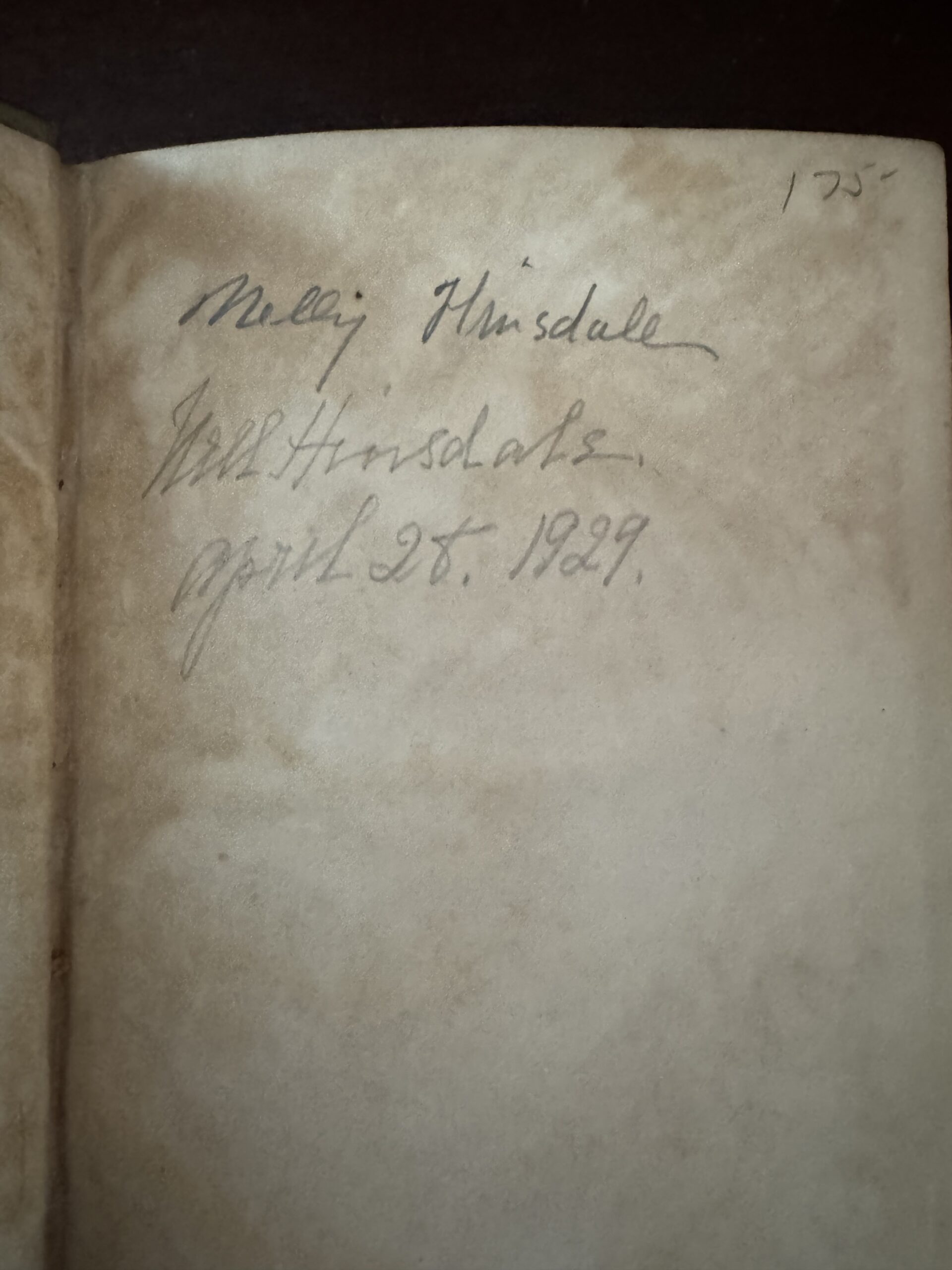
Inscription: “Nelly(?) Hinsdale; ??? Hinsdale; April 28, 1929”
Christmas as we know it today is actually a fairly recent development. Most of today’s Christmas traditions only took hold in the mid-to-late-1800s, really starting with the publication of Charles Dickens’ A Christmas Carol in 1843. So it can be an interesting snapshot in time to see books about Christmas that were published around that period or earlier.
This is one of those “pre-Dickensian” books. First published in 1836, The Book of Christmas, aims to give a history of Christmas, how it was celebrated over the centuries, and document the contemporaneous traditions. A majority of the first half of the book is spent looking backwards in time and lamenting the loss of Christmas as a meaningful holiday and expressing the hope that it can be restored at some point.
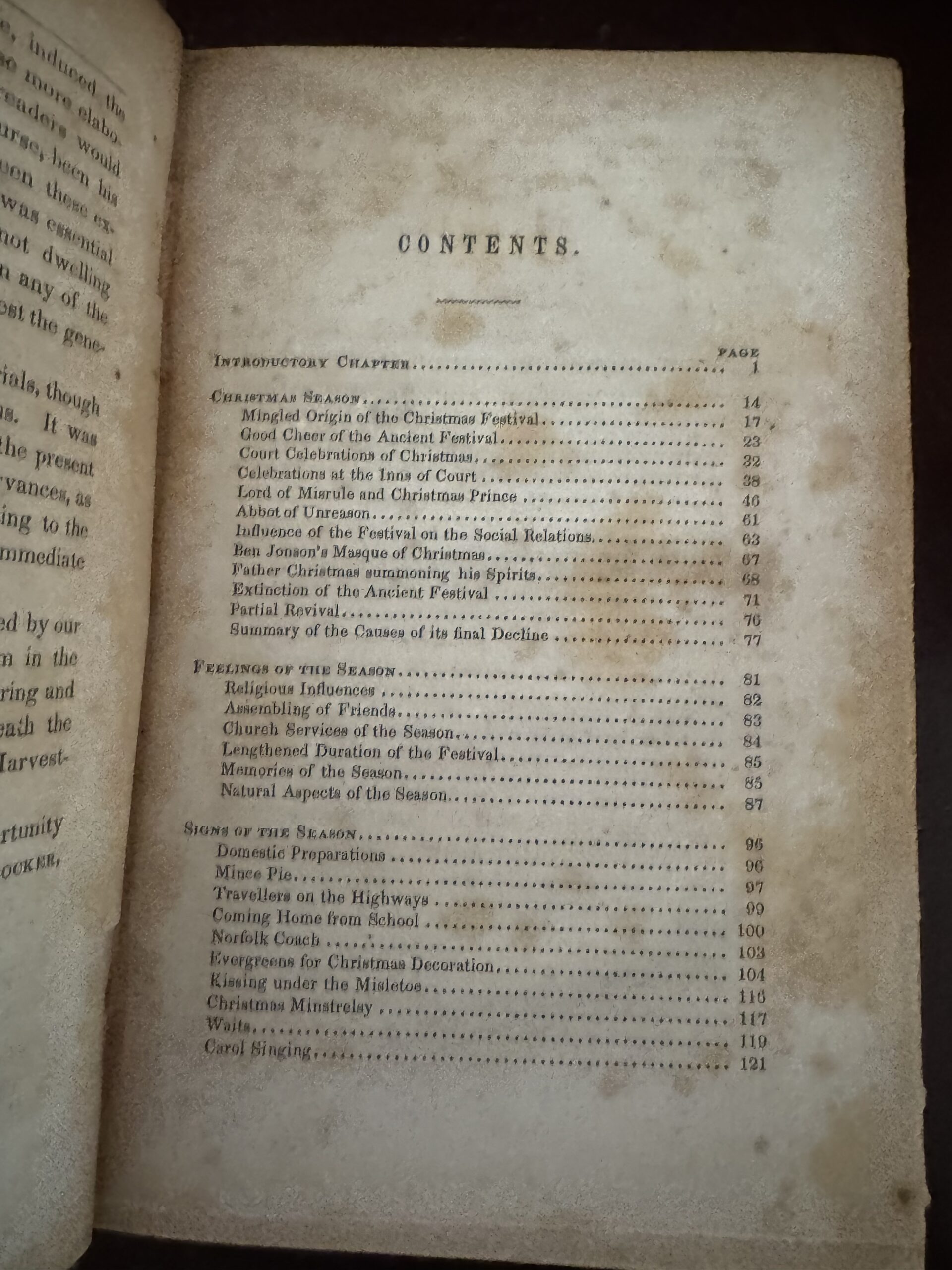
Once the book moves beyond its extended pontification of the state of Christmas, it is an intriguing time capsule of Christmas traditions, some of which persist today, but many which seem unusual to modern readers, namely:
- The Lord of Misrule, a role in government who was responsible for overseeing holiday celebrations
- People still kissed under the mistletoe, but the tradition also included that if a woman was not kissed under the mistletoe, she would not get married in the upcoming year
- “Going a gooding”, where women go house to house presenting flowers and begging for money in return
- “Mummers”, groups of people who wear costumes and dance through the streets
- Plum pudding, including an unusual twist that if a woman fails to make plum pudding by day break, then two men must bring her to the marketplace to make her ashamed for her laziness
- Christmas Day did not involve gift giving. Rather, on Boxing Day, the day after Christmas, wealthy families would give gifts to the lower classes. Later, on New Year’s Day, friends and family would exchange gifts.
- A special cake would be eaten on the twelfth night of Christmas, including a complicated ritual of putting characters on the cake and having guests read verses based on the characters.
Notably absent is any mention of Christmas trees, Santa Claus, or even Christmas carols.
Thomas Hervey (1799 – 1859) published this book just before the renewed enthusiasm for Christmas took hold in the Victorian era, and so it was well timed to become a very popular book. The first edition featured illustrations by Robert Seymour, who also illustrated for Charles Dickens books.
Historical context:
Christmas was a controversial holiday in the 1700s and earlier. Puritans did not celebrate it as it is not mentioned in the Bible, and when observed was often a boisterous celebration. The mid-1800s saw a revival of the holiday with an emphasis on family and goodwill. Future Queen Victoria was the first to write about having a Christmas tree, in 1832, with it becoming an accepted tradition in the 1870s. Christmas became a national holiday in 1870, and the first Christmas card was introduced to America in 1875.
Further Reading:
- Full text (Project Gutenberg)
- “An early Christmas Present”, from the Special Collections blog at the University of Bristol Library
- Thomas K. Hervey (Wikipedia)
- Nelly Hinsdale (FamilySearch, login required) — likely owner based on inscription
Acquired January, 2026